JOHN LOCKE (1632-1704)
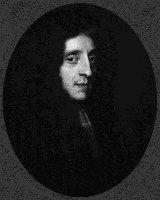
Considerado o pai do empirismo britânico, principalmente depois da publicação do Essay concerning Human Understanding, de 1690. Nasceu em Wrington, Somerset, sendo educado em Oxford. A partir de 1667, associa-se ao Anthony Ashley Cooper, o primeiro Earl of Shaftesbury. Em 1669 elaborou uma constituição para a colónia da Carolina na América do Norte, que nunca chegou a entrar em vigor. Em 1675, depois da queda de Shaftesbury, Locke passou para França. Regressa à Grã -Bretanha em 1679, mas depressa passa ao exílio, vivendo nos Países Baixos entre 1683 e 1688.
· Essays on the Law of Nature
· Letters concerning Toleration, 1685-1692
· Two Treatises of Government, Londres, 1689
Second Treatise on Government - Locke
Ver a ed. de Peter Laslet, Cambridge University Press, 1988
O primeiro tratado, destinado a refutar as teses de Robert Filmer, abrange os seguintes capítulos: The Introduction; Of Paternal and Regal Power; Of Adam's Title to Sovereignity, by Creation; of Adam's Title to Sovereignity, by Donation; Of Adam's Title to Sovereignity, by the Subjection of Eve Of Adam's Title to Sovereignity, by Fatherhood; Of Fatherhood and Propriety, consider'd together as fountains of Sovereignity; of the Conveyance of Adam's Sovereign Monarchichal Power; Of Monarchy, by Inheritance from Adam; Of the heir, by Inheritance from Adam; Of the Heir to the Monarchichal Power of Adam; Who Heir?.
O segundo tratado é também designado por Essay on Civil Government: The Introduction; Of the State of Nature of the State of War; of Slavery; Of property; of Paternal Power; Of Political, or Civil Society; Of the Begining of Political Societies; of the Ends of Political Society and Government; Of the Forms of a Commonwealth; Of the Extent of the Legislative Power; Of the legislative, Executive, and Federative Power of the Commonwealth; Of Prerrogative of Paternal, Political, and Despotical Power, considered Together; Of Conquest; Of Usurpation; Of Tyranny; Of the Dissolution of Governments.
Refira-se que logo em 1833 surgiu em Londres uma tradução portuguesa desta obra, da autoria de João Oliveira de Carvalho, Ensaio sobre a verdadeira origem, extensão e fim do governo civil
· The Reasonableness of Christianity, 1696
&
· CHARLES BASTIDE, John Locke, ses Théories Politiques et leur Influence en Angleterre, Paris, Leroux, 1906
· EMILIENNE NAERT, Locke ou la Raisonnabilité, Paris, Seghers, 1973
· G. PARRY, John Locke, Londres, Allen & Unwin, 1978
· JULIAN FRANKLIN, John Locke and the Theory of Sovereignty, Cambridge, Cambridge University Press, 1978
· NEEL WOOD, John Locke and the Agrarian Capitalism, Berkeley, University of California Press, 1984
· RUTH GRANT, John Locke's Liberalism, Chicago, University of Chicago Press, 1987 · JOHN MARSHALL, John Locke. Resistance, Religion and Responsability, Cambridge University Press, 1994
· A. JOHN SIMMONS, The Lockean Theory of Rights, Princeton, Princeton University Press, 1994; On the Edge of Anarchy. Locke, Consent and the Limits of Society, Princeton, Princeton University Press, 1995
1
· ADRIANO MOREIRA, Ciência Política, pp. 17, 48, 63, 83, 133, 134, 136, 232, 238, 260, 316, 325, 326, 389, 400, 426
· ANTONIO TRUYOL Y SERRA, Historia de la Filosofia del Derecho y del Estado. 2- Del Renacimiento a Kant, Madrid, Alianza Universidad, 1982, pp. 194 ss
· EDUARDO ABRANCHES SOVERAL in Logos, 3, pp. 439-444
· FRANÇOIS CHÂTELET e EVELYNE PISIER-KOUCHNER, Les Conceptions Politiques du XX e Siècle. Histoire de la Pensée Politique, Paris, PUF, 1981, pp. 150-153
· JEAN-JACQUES CHEVALIER, História do Pensamento Político, II, pp. 29-53
· JOAQUIM DA SILVA CUNHA, op. cit. pp. 247-257
· JOSÉ ADELINO MALTEZ, Ensaio sobre o Problema do Estado,II, p 202 ss.
· LUÍS CABRAL DE MONCADA, Filosofia do Direito e do Estado, I, pp. 205-223
· MARCEL PRÉLOT, As Doutrinas Políticas, 3, pp. 35 ss
· OTTO VON GIERKE, Natural Law and the Theory of Society. 1500 to 1800, trad. ingl de Ernest Barker., Cambridge, Cambridge University Press, 1938, pp. 101, 103, 106, 113, 128, 136, 149, 157
· PHILIPPE RAYNAUD, in Dictionnaire des Oeuvres Politiques, pp. 459-472
· RAYMOND G. GETTELL, História das Ideias Políticas, trad. port. de Eduardo Salgueiro, Lisboa, Editorial Inquérito, 1936, pp. 259 ss.
· WALTER THEIMER, História das Ideias Políticas, trad. port., pp. 141 ss
Voltar a lista de autores
